Clothing the Celts

Posted by on Saturday, July 22nd, 2006

There’s been a trend lately, wherein knitters take up sewing.  Lovely aprons and skirts and summery tops are popping up all over the blog-o-sphere.  Grand! 

Which makes me think, maybe not all of the new stitchers have been given all of the secrets.   I started sewing costuming when I was 14.  By 16, I was pretty darn good at it.  Once I got into college, Crazy Lanea’s was firmly established as a time-shredding hobby.  And since it’s crazy sewing season for me, I figured I should share some of what I know and show you all how I work.  So here goes.

Step one: Buy good fabric. 

  • I know it seems obvious, but beautiful hand- and machine-sewing is almost entirely dependent on the quality of fabric you’re working with.  Just about every sewing disaster starts with bad fabric (except when the sewer in question has some machine killing curse). 
  • Since I make primarily historic costuming for myself and for my friends, I work almost exclusively in linen, wool, silk, cotton, and blends thereof.  Those fabrics were all available to the wealthiest insular Celts in the part of the Iron Age we recreate, and they are all wonderful to work with, so we use them.  Natural fabrics wear well, they’re washable (I promise–we’ve been washing wool for thousands of years), they take dyes beautifully, they breathe well, and they feel good in the hand and against the skin. 
  • Perhaps more importantly, because the clothes I make are worn either in hot weather or around fires much of the time, it’s important that I not encase my loved ones in anything that will keep their sweat from evaporating or melt if briefly exposed to fire.  No acrylic, no nylon, no poly, nothing made from petrochemicals.  Never ever ever. 
  • If you are sewing for children, please don’t dare make anything from melt-able synthetics, I beg you. 

Step two: Since you’re already at the fabric shop, buy a freaking drawstring pants pattern, already.

  • I make a lot of pants, in part because many people I know have terrible luck making their own pants because they refuse to buy commercial pants patterns.  Don’t be silly, folks.  Pants patterns are cheap, and since we’ve already broken the rules by using commercially made fabrics that are woven on looms far wider than the Celts used and dyed with chemical dyes, using a pattern is no cop out.  There is a special little trick to making the crotch of a pair of drawstring pants, and Butterick or McCalls will teach you that trick four $4.  The curve at the front and the curve at the back are different.  I promise you.  And it’s hard to duplicate the curve correctly without a pattern. 

Step three: Buy the right tools and notions.

  • Make sure  to get good thread.  Your seams will last longer.  What thread you need to buy depends on what sort of fabric you’re using.  When in doubt, talk to someone who works at the store.
  • Get good shears, and don’t use them on paper or leather.  Your hands will thank you. 
  • Buy some tailor’s chalk–it is incredibly useful. 
  • Get good pins, and lots of them, in a few sizes.  You must must must pin things.
  • Get and use an iron and an ironing board if you don’t have them already.  Whattareya, raised by wolves? 
  • Get some good small needles for hand-sewing.  Thou shall not machine-hem clothing for living history. 
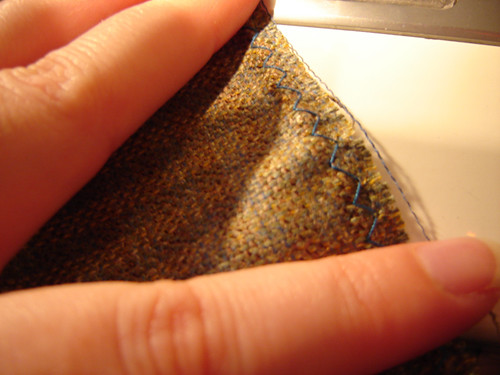
  • That seam will save you money and time.
  • You will lose much less fabric to fraying; fabrics will get less knotted up on the dryer, and thus dry more quickly; and it will be easier to iron everything later.  Linen is particularly fond of fraying. 
  • I experimented last year–I bought two 3-yard pieces of linen in the same weight from the same source.  One I tossed in the wash without that quick line of stitching, the other I sewed up, proper like.  I dried both in the dryer, and then pressed them.  The one I sewed first was 2 and 3/4 yards once it was pre-shrunk and pressed.  The other one?  2 and 1/4.  $5 gone into the trash and the lint filter.  For a person like me who makes probably 30 garments a year, that’s $150 plus wasted. 
  • To make matters worse, all of that frayed mess that comes off fabric you don’t bother to prep may decide to either destroy your washer’s motor or clog up your waste-water line. 
  • Also, yes, I am telling you to prewash all of your fabric, no matter what the label says.  All of it.  Yes, the silk.  Yes, the linen, and certainly the wool.  Your wool will full a bit.  That’s good.  That’s what both Celtic and Viking weavers did with their woolens.  They were smart about fabric, because it was so much more valuable to them than it is to us. 
  • Once it’s all clean, machine dry all of your fabric that is not woolen.  Yes, I said it–throw everything but the wool in the dryer.  Treat it roughly before you put any effort into cutting and sewing.

Step five: Pull your fabric out of the dryer when it is still damp and iron it immediately.

  • It will be much easier to press, and all of your prep work will be done. 
  • If you decide to take a break from sewing and the break lasts four months, you’ll be able to start cutting knowing that all of the boring stuff is already taken care of.
  • If you’re working with wool, line dry it until it’s fully dry, and then press it lightly. 

Step six: Think before you cut.

  • Think a lot.  What’s cut cannot be uncut.
  • Consult decent patterns or costuming resources before you do anything drastic.
  • Get good measurements of yourself or your victim subject.  It doesn’t matter how well you can sew if you can’t fit a garment.
  • Find the grain of your fabric.  If you’re new to sewing or your eyesight isn’t great, mark the horizontal and vertical grain with your tailor’s chalk.  Cutting pieces off-grain will cause you lots of problems later on–patterns won’t line up, hems will never be straight, you’ll get funny puckering where you don’t want it.
  • If you’re using a pattern or a finished garment as a template, give some thought to the most efficient or appropriate way to lay out your piece before you cut.  If you’re using a pattern, you’ll need to figure out how to match it up before cutting. 
  • Make sure you are leaving yourself decent seam allowances, particularly when working with fabrics that like to fray.  Linen really likes to fray.
  • Also think about whether you intend to wear the garment against your skin or as an outer layer.  If it’s likely to be layered over other pieces, give the pieces extra ease.
  • If you’re making a tunic or dress, remember to leave enough fabric for a neck facing.  Neck facings are grand things.  Use them.

Step seven: Think some more before you cut.

Step eight: Cut safely and cleanly.

  • Keep your pets away from your cutting surface.  If your cutting surface is the floor, vacuum it before you lay out your fabric.
  • Lay out your pattern pieces carefully and pin them in place.  If you’re not using a pattern, draw out your shapes with tailor’s chalk, making sure to pay attention to the grain, to any stretching that may occur as you draw, and to any folds and selvages.
  • Before cutting, look at the pattern pieces or drawn cutlines carefully from several points of view.  Stand back from your work and look some more. 
  • Keep your fingers out of the way of your shears.  Seriously.  Lots of people cut themselves badly while cutting out fabric.  Don’t do it–it ruins the fabric.
  • Make sure you are about to cut the right number of backs and fronts, the right number of sleeves and legs, the right number of facings, etc. 

Step nine: Pin pieces together before you start sewing. 

  • Just trust me, here.  Your sewn curves will lie flatter, your pants-legs will match up top and bottom, your hems will be easier.

Step ten: Remember that there is such a thing as a seam that is too strong.

  • Many of us want to sew things so strongly that they’ll be indestructible.  It’s impossible.  Stop thinking that way.
  • Think instead of how to sew things so that they can ultimately be repaired.
  • If your seams are too strong because you used too heavy a thread or reinforced them too much, when a stress point finally tears, it will be the fabric that fails instead of the seam.  It’s no trouble at all to resew a blown seam.  It’s a pain in the ass to patch shredded fabric near a seam.

Step eleven, twelve, and thirteen:  Press your seams as you go.

  • Again, just trust me.  It will be much easier for you to sew seam intersections, like those in the crotch of a pair of pants.  And your finished garment will lie better against your body.  And you will go to heaven.

Step fourteen: Try the assembled garment on before you start pinning up hems.

  • Too short is bad. 
  • Uneven hems are bad.
  • Having a friend to help measure and pin up a skirt hem is wonderful.  If necessary, bribe a talented sewing friend with baked goods or silk.

Step fifteen:  Pin your hems carefully, and sew them by hand.

  • I sew hems by hand on almost everything I make, whether or not it’s for living history. 
  • Machine stitching is ugly and it’s inelastic. 
  • If you want the hem of a skirt to hang beautifully, sew it by hand. 
  • If you want people to notice the beautiful texture and color of your silk noil instead of the robotic staccato of machine sewing, sew it by hand. 
  • If you want a neck facing to lie properly, sew it by hand. 
  • Hand sewing goes slowly, sure, but that leisurely pace allows you to tweak things ever so slightly in ways you won’t be able to manage while chugging along on a machine.

Step sixteen: If you don’t want to do all that stupid hard work, bribe Lanea to make your clothes.

  • I like amber, fabric, yarn, silver, hand-cast bronze things, handmade shoes, money, vacation homes–you can find a way to get me to sew for you. 
  • Unless you’re a jerk to someone I love, that is.  And then there’s no hope for you or your wardrobe, and you will have to buy plaid drawstring pants at Wal Mart and hope for the best.  The best will never come.  Move far away, gone guys, and don’t come back.

Step seventeen: Be kind to your handmade garments.

  • Don’t leave wet garments in a pile to moulder–if something is wet and dirty, hang it up so that it can at least be dry and dirty.
  • Use the gentle cycle with cold water to wash them.
  • Soak stains out instead of scrubbing them too much.  If you’ve got a stubborn stain, consult a stainremoval guide.
  • Hang your clothes to dry: it’s good for the clothes, the environment, and your electric bill. 
  • Don’t leave dark or brightly-dyed fabrics in the sun too long–they’ll sun bleach. 
  • Don’t use chlorine bleach: bleach eats wool completely away, it yellows linens, and does cruel things to most other natural fibers. 
  • Don’t wash just a couple of garments at a time in a machine: the less stuff in the tub, the more the stuff gets beaten up.
  • Use dye magnets when washing red or blue garments that are relatively new.
  • Fix tears and holes as soon as they occur.  If I made you something and it’s damaged and you’re not confident about fixing it yourself, ask me to help you.
  • Don’t wrestle or fight in any fancy-schmancy stuff I make you, or I’ll cut you off. 

Coming soon: A day in the sweatshop. 

Filed in sewing,tutorials | 5 responses so far

Mood Indigo

Posted by on Friday, July 21st, 2006

I don’t know where you were on Wednesday, but, damn girl/boy, you should have been with us. 

Claudia wanted to see the Indigo Girls for her birthday.  Dami, in her own Dami-like way, started buying tickets and threatening to buy more tickets and possibly kidnap people and make them have fun, if it came down to it. 

As is to be expected, we met up at the gates and just started laughing.  I think at least one of us was laughing at a time for the next five and a half hours.  Oh, and sweating.  The sweating stopped around 9:00.

We got a great spot on the lawn, and Claudia and Heather appreciated becoming land-owners in Fairfax County, however short the period of ownership:


And maybe they laughed a bit at our very own feral Scott,


Seen here protecting us from some very dangerous shrimp cocktail, if I remember correctly. 

We enjoyed the rest of our dinner and a few adult beverages, and were joined by Jeanne (behind a camera as usual) and Davey and Jenne:

Who had to join the hilarity for a while before the show started. 

We had to encourage Scott to distribute our surplus food to the neighbors.   You know who is happier than a lawn full of (mostly) ladies waiting to see a legendary folk duo?  That same lawn full of ladies eating Heather’s hazelnut brownies. 

We spotted really nice handknits there in the wilds:


I actually tried to get this girl to come over so I could look at her sweater more closely, but I think she thought I was nuts.  I don’t know why:


I was  just sipping my wine and knitting a sock.  One of the girls behind us was a fledgling knitter, and she was both intrigued by the sock knitting and really puzzled that the stranger wouldn’t come play with us as soon as I started calling out for her to come let us see her sweater.  We agreed that the girl with the great sweater had probably received it as a gift, and maybe should have to hand it over to the Birthday Girl Claudia.  And then our knitting neighbor offered to go get the sweater from the undeserving stranger.  Atta girl, neighbor on the lawn.  You are ready to truly lose yourself to knitting.   Unlike most of us, you will really need the bail money I offered you.

I fell hopelessly in love with Natasha’s hair, because, really, who wouldn’t


The color!  The crimp!  The staple length!

Dami got a lovely shirt:

And it’s influence made her even goofier, if that’s possible. . .

And, well, we had a fine time.  A fine time.   

Filed in Music | 3 responses so far

The Knitters Review Webring

Posted by on Thursday, July 20th, 2006

Here are the updated Ring guidelines, as developed on Knitter’s Review.  Please follow them, so we don’t have to move you into the queue:

1. Link to this page with the words "Knitters Review Member",  "Knitters Review Webring", or the ring button.  Don’t link to Molly’s old KR Ring page.

2.  Include, at a minimum, a back and a forward button so people can scroll through the ring.

3. Put your ring code somewhere obvious.  If you put it at the bottom of the page in a footer, you’re not being particularly kind to those people who surf the ring or to me and the other ring checkers.  Rings are fun because they are easy to surf–help the folks on either side of you–not just yourself.

4. Post about knitting and/or spinning regularly.

5. Post something at least once every two weeks.

6. Use the correct code.

* The image link in my code links to my copy of the button image.  Yours needs to link to your copy of the button image.  I am a kind, loving person, but if folks steal my bandwidth (aka, hotlink) unrepentantly, I will toss them out of the ring right quick-like. 

* In the "previous" and "next" links, my number in the ring appears.  In your code, you need to list your number.  If your code is currently working correctly, you should maintain this number as-is.

Several of the kind members of Knitter’s Review are helping me check code throughout the ring. If you would like to pitch in, email me, PM me on KR, or leave a comment below.  More hands lighten the load. 

And now, the official disclaimer:

Disclaimer: This ring is not affiliated with Knitter’s Review. If you have problems with the ring, do not contact KR or Clara. Although she has given us her blessing to have this ring, she is not involved in anyway. Concerns should be sent to me at "lanea AT cox dot net."  Thanks.

Filed in knitting | 14 responses so far

Feats of valor, and, er, excess

Posted by on Tuesday, July 18th, 2006

Scott just saved a squirrel.  It had fallen off of our roof into a trashcan full of rain-water.  We don’t normally keep booby-traps around to torture the wildlife, but these floods and storms keep getting ahead of us.  Our hero was outside grilling up some burgers and just happened to check to see if any of the cans had standing water.  The poor little squirrel was trying his best to swim–squirrels aren’t the best swimmers, apparently.  When Scott tipped the can, that poor little rodent zipped up a tree and just sat there panting for ages.  I bet his little squirrely life was flashing before his eyes.

I’m expecting he’ll get back to ransacking my pitiful, water-logged vegetable garden any second now.  He’s got some strawberries to finish.   Take all you want, little pal.  I’d offer you a towel, but you seem to need to keep yelling at the empty trashcan.  Take your time.

And for his next trick, the intrepid Scott. . . .  installed the window air conditioner in the sweatshop, no, studio oh, who am I fooling.  Sweatshop.  Woot!  I am sitting at my desk and not sweating.  Life is good.

I finished:

Some very warm socks made out of Rowan Cork

Some blue Trekking socks:

Which reminded me that my grafting has gotten sloppy:

That little ear and ridge will drive me even crazier.  I should read up.

Also, I thought I was done with that log-cabin blanket:

But it had a bad corner:

Which demanded, and received, some attention:

And will be flying the coop someday very soon.

And I did some more experimenting with the sewing machine that ate New York.  The thing is a beast.  It has repaired canvas tents and sewn double-layer super-tarps.  It has sewn deerskin as if it were calico.  I’m pretty sure it beat the crap out of a rampaging bull last week.  It sails through layers of denim and felt and cotton and whatever else I decide to sandwich into a potholder but, well.   . . .  I still hate machined applique.  I hate it like poison:

What can I say?  I’m a girl who thinks machine-made things are inherently uglier than hand-made things.  My Mom, however, really loves the scattered-leaf motif, and she wants this.  And more like it.  And who am I to say no, since it’s so easy to do this way?

Holy crap.  With that kind of attitude, I’m going to start hot-gluing my seams and bedazzling purses.  I’m going to turn into one of those people who lies and says they baked cakes they actually bought at the store.  I’m going to become, dare I say it, less crazy.  Send help.

I swatched and swatched for Print o’ the Wave, and I think I actually have made a decision.  Wonder of wonders.  Proof forthcoming.

But the knitting is in the backseat for now, because I have to make the piles and piles of clothes, and I have to do it now.  I got a lot of linen:

When I say a lot, I mean nearly 20 yards.  I would have gotten more, but apparently they still let the masses shop for fabric during my official season.   Sheesh.

I also got a few good patterned pieces:

The one in the center is a linen blend I’ve used before, and I love it.  Very gauzy, and the pattern is particularly striking in firelight.  The bottom:

Is a really lovely wool silk.

The best bit, though, is that top fabric.  It’s a bi-color linen–green on one side, blue on the other:

I love it so much I want to eat it.  I don’t think I’m willing to share this one.  I’ll tell folks where it came from, though, if anyone wants some.  It’s on sale and everything.

Filed in knitting,sewing | 2 responses so far

Come on in

Posted by on Tuesday, July 18th, 2006

Tonight: a proper post with evidence of knitting, fabric acquisition, and possibly even weaving.    My studio has officially turned into a sweatshop, and it was just too hot to work in there last night.  Tonight, we should be able to put in the window AC unit.  Fingers crossed. 

So I can’t show you what I’ve been up to yet, but I will say that I now own about 30 yards more fabric than I did on Saturday, and more than half of it is linen.  If you’re wishing and a hoping Crazy Lanea will produce you some clothing in time for Celtic summer camp, then start hinting more loudly.  I’m making fewer garments than usual this year.  If you’re really smart, you’ll give me your measurements.  With measurements,  I make folks like Richard and Scott look like they have their own tailor.  Because they do.   Because the former pays with bronze, and the latter is my main squeeze husband. 

Without measurements, Crazy Lanea’s turns into a wacky grab-bag of handmade clothing, wherein I make lots of pants in standard sizes and some tunics to fit people whose dimensions I know well, and maybe a ruana or brat or skirt or dress here and there; and you fret and pester me to let you get to the basket first, and I explain that you have to wait for Richard to finish, because he pays with bronze;  and no you can’t have Scott’s new del; and put down the linsey-woolsey dress now, dearie, cuz it’s mine; and No I can’t make you something from scratch here and now because I’m trying to be on vacation too. 

All of that had a very loving, patient tone.  I swear.  I love you wacky kids, and I love dressing you.  I just hate summer weather.

But let’s get back to the point of my missive. 

This morning: invitations.

A yarn shop map: http://www.frappr.com/yarnshops
A few of us have been adding shops to this, and all y’all should add your favorite shops too.  It’s relatively easy to do, and it makes it fun to plan road trips around fiber.   

A Print o’ the Wave Stole Knit along, which requires no blog: http://groups.yahoo.com/group/wave_stole/ 
This is a wonderful pattern we’re working with.  I am still in the indecisive swatching phase, because I apparently hate to knit lace on any and all of the needles I have.  I’m not sure what to do about that.

Update: It looks like I’ll be taking over the Knitters Review web ring.  Watch this spot for the official spiel. 

Join on in.  And let me know if you really want something pretty to wear.  It is almost time for camp, and I can’t wait.

Filed in knitting | 2 responses so far

Send me your ears

Posted by on Monday, July 10th, 2006

Writing a blog, I am often frustrated by either my failure to take the pictures I should or my inability to transmit certain sensations to all y’all.  I want you to be able to smell what I’m baking or cooking, or the flowers in my garden, or even my wet dog when he comes in from the rain.  I want you to be able to taste the bridies I make, or the cannoli, or polpette.  And I want you to be able to feel the things I make out of leather or yarn or fabric.  And I want you to be able to see things in motion, hence the little movie of me knitting last week.  No matter how much I think we manage to connect in this little community we make in the ether, it’s not quite enough sometimes.

Mostly, I want your ears.

A while back, I wrote a little something called “I am Not Quiet.”  That title is one of the truest lines I’ve ever written. See, a major portion of my head-space is taken up by music and dance.  I love poetry as much as I do because it is music, and it’s the form of music I have the strongest hold on.  I’m better with words than I am with strings, particularly since my body started turning on me.  So I write, and I sing a lot, and I study the songs and poems available to me.  Sometimes I still play tunes, but not enough.

In just about everything I do, I’m trying to learn more about folk arts.  The music, the songs, the dance, the arts and crafts, the food–it’s all about preserving and disseminating culture for me.

Live dance and music are and should be intertwined. They form a wholly/holy communal pact when everything is right.  Musicians are playing for dancers, and dancers are dancing together, as a group, to thank each other and the musicians.  When I was dancing with the Hoorahs, most of the musicians who played for us were also dancers.  It was ideal.  It was so good, I’m tearing up just picturing the solo break in Flapjack.  Man, I wish I could show you all the little movie in my head.  Sheew dooggy.   I am one lucky lunatic.

My dancing is about sound as much as it is about movement, if not more.  Percussive dance is particularly important to me because, as an art form, it has been largely commodified and codified and crushed.  As it’s been commodified, it is stripped of history and style and myth.  It’s happened to Irish step dance–Sean Nos is losing ground.  It is happening to clogging and tap now.  Most dance students only hear recorded music and only learn steps that are identical to those learned 500 miles away.  I shudder to think what out grandkids will be left with, if none of them learn from regular folks in their community at community classes.  I have visions of automatons in jingle taps.  Satan is behind the freaky homogonization happening in percussive dance, I tell you, and Satan wants you to buy jingle taps.

If I never manage to get my poetry out to a wider audience, I think I’ll be ok.  But if I fail to transmit the steps I’ve learned from the generous dancers who have taught me what I know, then I’ll actually feel like a failure.  And I have to get teaching now, because my limbs are screwed up.  I’m not the dancer I was ten years ago.  I don’t want to lose any more ground before I share the knowledge that’s held in my feet.

All of which is why I was particularly happy to teach a bit of clogging to some of my nearest and dearest over the Fourth.  And why dance will hopefully take up more space here for a while.  I’ll gather up all of the notes from the classes I’ve taught and put them here for the folks I’m teaching.  If you want to start learning something about percussive dance, well, darn it, I’m your girl, and I’m your girl right now.  Not in five years.  Not when you finish that big project.  The sooner you hit me up for a lesson, the more I can show you.  I’m not looking for money–I’m looking to leave a sonic legacy.

Stomp shuffle-step shuffle-step, stomp stomp,  shuffle-step shuffle-step, stomp stomp, shuffle-step drag shuffle-step drag stomp, shuffle-step drag shuffle-step drag stomp

Filed in dance,Music | 3 responses so far

Nature is never spent

Posted by on Friday, June 30th, 2006

Generations have trod, have trod, have trod;
And all is seared with trade; bleared, smeared with toil;
And wears man’s smudge and shares man’s smell: the soil
Is bare now, nor can foot feel, being shod.

And for all this, nature is never spent;
There lives the dearest freshness deep down things;
And though the last lights off the black West went
Oh, morning, at the brown brink eastward, springs —

From God’s Grandeur by Gerard Manley Hopkins

Hopkins was clearly a dirt-scratching Heathen, just like me, despite his, well, tendency to go to church.  And, as a dirt-scratching Heathen, I’ve had plenty of nature to think about lately, what with the flooding.  But before the flooding, there was just a hot Virginia summer, and we immersed ourselves in it.

Morven Park International Equestrian Center, where we hold the Potomac Celtic Festival, was recently purchased from the foundation that owned it.  Morven is right off the historic route 15 corridor, which has some of the most important historical sites in Virginia.  Many people from several communities are crossing our fingers, hoping that this gem will be preserved.  Much of rural Northern Virginia has already disappeared under bulldozer tracks and mini-mansions.  I’d like to send a big call out to, well, whoever, to keep what’s left safe.  That land is already fully occupied, you know.


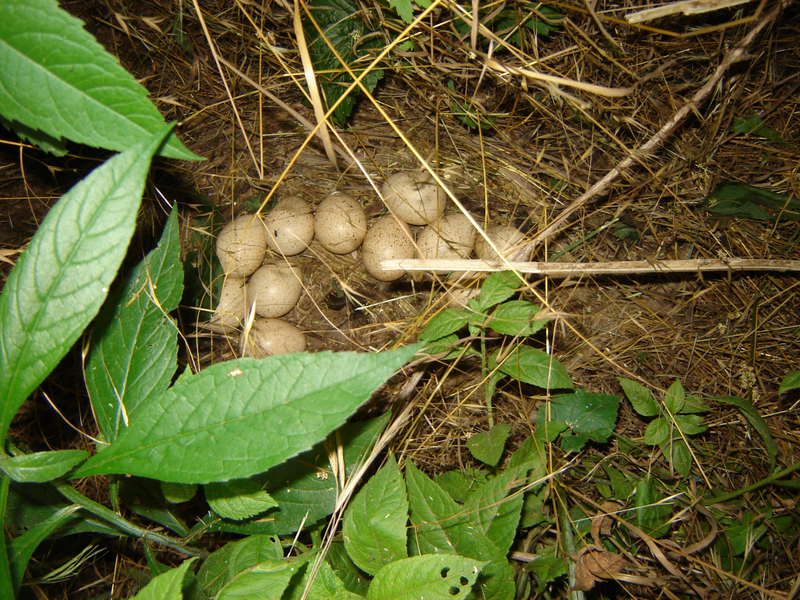
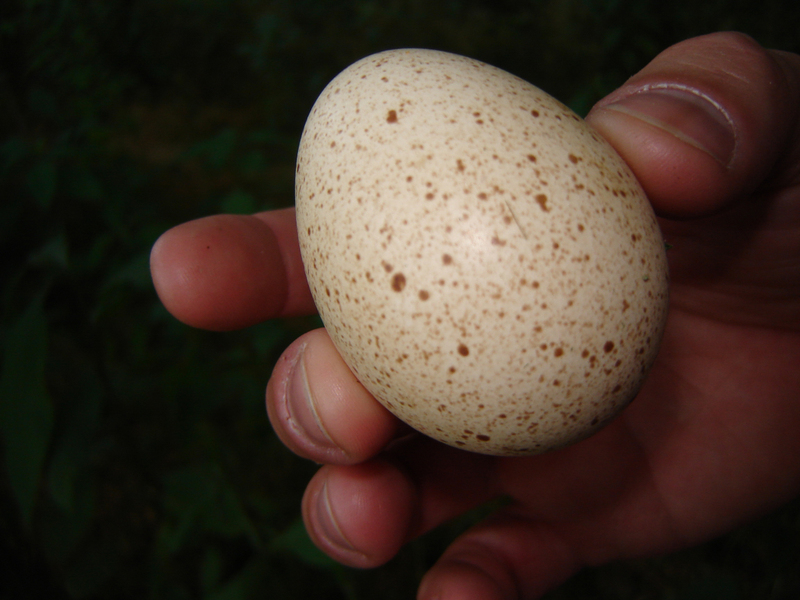
Our neighbors at the Potomac Celtic Festival, the soon-to-be-turkeys.  They apparently started hatching soon after the festival grounds were cleared.  Their Mom wasn’t entirely pleased with how close the amphitheater stage was to her clutch, but we made sure these eggs were safe, and she came back at night when things quieted down.


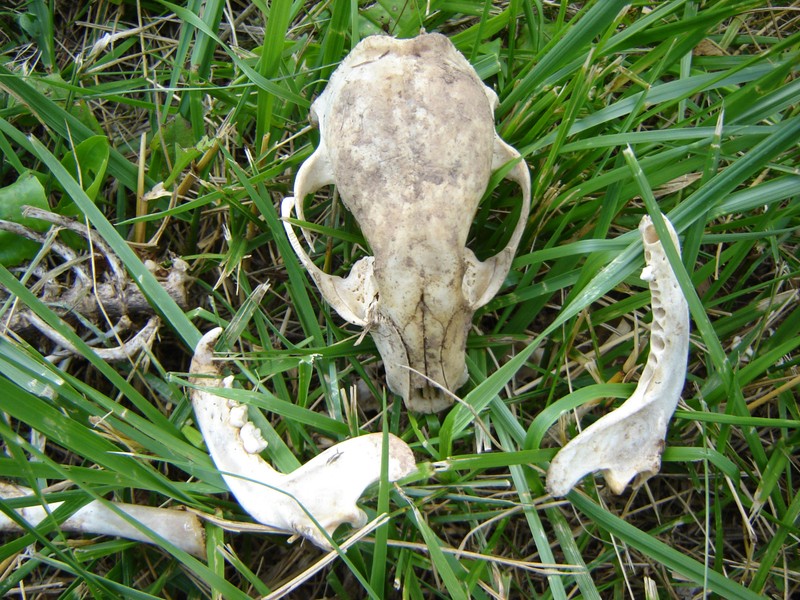
A former opossum.  At least, that’s what the teeth say.  Bill found him while we were measuring out the spots for the crafters’ tents.

Moragh and Cellagh in the gloaming, apparently glad that things cooled down enough at night to actually let a person within one’s personal space.

After the festival ended, the rain started.  And it hasn’t quit yet.  There’s flooding all over the East Coast now.  We’ve been lucky, though the Mean-Skutah manse does now have its own new lake.

I hope that crab-apple is ok with having wet feet.

With all the rain, most of us have been stuck indoors.  Scott and Kayo have taken some soaking walks and brought back tales of flooded streets and storm-drains spitting out hundreds of gallons of water, and the cats and I have just taken them at their word.  Yarrow has taken to playing, near constantly, in the wine-box fort Karen and Lee left for him.

Like most youngsters, he’s unwilling to share it with his older brother Speedwell.

And I have been log-cabining through my cabin fever, trying not to notice my strawberries rotting on the stem or count the inches distance left between the growing lake in the front yard and our threshold.  The log-cabin is pretty entertaining.

For a few of us.  This is the kitten’s Big Bad Wolf impression:

Speedwell has one too, but he’s camera shy.

Stay dry, and protect your local rural idylls.  They soak up floods, you know.

Filed in blather,Celtic,knitting,Music | 3 responses so far

Someone stop me, I beg you.

Posted by on Thursday, June 29th, 2006

Watch Crazy Lanea knit socks, and then tell her what she is doing is wrong.

I need your help.  And I need it enough that I was willing to hold itchy yarn in my décolletage to make that little film.  And grow a third arm. 

Ok, fine, Scott took the movie, but please humor me anyway.

Knitting recently re-introduced me to a type of injury I haven’t experienced in a long time.  I grew up embroidering, and I am used to developing a callous on a finger of my left hand, only to later crack it, puncture it, and, well, realize what it feels like to stick steel right onto a nerve.  In short: I don’t recommend poking any of your nerves, especially those very sensitive ones in your fingertips, with steel needles.   Not pleasant, that. 

I rediscovered this particular displeasure because I was knitting always and only socks between March and the week of the festival.  I was starting to get really bored with the plain old socks, but the Festival work, soul-sucking beast endlessly rewarding avocation it can be, prevented me from anything wacky like "reading a pattern" or "knitting lace" or "forming sentences with more than five words that contain no profanity."  And socks are easy to knit on the Metro.  Right before the festival, perhaps because I was a little tense, I drove a US size 1 needle right into my finger.  I should have taken a picture.  Be glad I don’t have a picture.  I tried to knit some during the festival, but that hurt like hell.  And it still hurt like hell in the week after the festival, despite all of the good first aid and medicinal adult beverages applied.

So, dear readers, I am beseeching your assistance.  Reform me.  I knit English style–wait, no, I’m calling it Insular style from here on out.  I’ve toyed with Continental, but I have a chronic injury in my left shoulder, and Continental knitting seems to irritate it.   When knitting, I form a stitch, and then push the right needle back towards my right hand with my left index finger.  Obviously, that’s not the best thing to do  when working with the tiny needles used for socks.  But I can’t picture what I could change to stop myself.  Can you?  Please?  I can only think of so many things to do on size 9 needles.  Thimbles have been recommended, but I’m sure I would never follow through.  I’d rather retrain my hands than rely on an extra implement.

Filed in knitting | 9 responses so far

The Tollund Man

Posted by on Tuesday, June 27th, 2006

So, I think every Heaney discussion should start with this poem.  I’m probably the only one who does, but since I’m at the helm for the moment, I’ll continue on apace.  Once upon a time, I gave a paper about his bog poems at an Irish Studies conference.  I used slides of the bog bodies.  They included a "don’t come to this talk if you’re squeamish" warning.  It was a proud day for me, lemme tell you.  I should find that paper and see if it was any good.  And, er, sorry that these poems are gross.  I think they’re gorgeous because, ultimately, they’re about pacifism and ancient European tribal culture, two of my favorite things.  I’m the type of person who stares right at death and physiology and rot and finds all of the above fascinating and necessary.

Right, so.  The poem:

The Tollund Man

I
Some day I will go to Aarhus
To see his peat-brown head,
The mild pods of his eye-lids,
His pointed skin cap.
In the flat country near by
Where they dug him out,
His last gruel of winter seeds
Caked in his stomach,
Naked except for
The cap, noose and girdle,
I will stand a long time.
Bridegroom to the goddess,
She tightened her torc on him
And opened her fen,
Those dark juices working
Him to a saint’s kept body,
Trove of the turfcutters’
Honeycombed workings.
Now his stained face
Reposes at Aarhus.
II
I could risk blasphemy,
Consecrate the cauldron bog
Our holy ground and pray
Him to make germinate
The scattered, ambushed
Flesh of labourers,
Stockinged corpses
Laid out in the farmyards,
Tell-tale skin and teeth
Flecking the sleepers
Of four young brothers, trailed
For miles along the lines.
III
Something of his sad freedom
As he rode the tumbril
Should come to me, driving,
Saying the names
Tollund, Grauballe, Nebelgard,
Watching the pointing hands
Of country people,
Not knowing their tongue.
Out here in Jutland
In the old man-killing parishes
I will feel lost,
Unhappy and at home.

Heaney wrote this poem when the Troubles in Northern Ireland were really getting out of hand.  P.V. Glob’s masterpiece had just been translated into English, and it was making a big impression on academics throughout Europe.   Reading it, Heaney gave a lot of thought to sacrifice, violence, martyrdom, religion, exile, and all of the things that a brilliant Catholic writer who grew up in Northern Ireland was likely thinking about as his state exploded around him and many of his colleagues and compatriots were radicalized. 

Bog bodies are one of those wonderful gifts to archeology that people like me geek about.  For whatever reason, Northern European tribes in the ancient world buried a lot of people in bogs.  And the wonders of cold temperatures, the tannins common in bog water, and the auspicious choice to inter these bodies at just the right time of year conspired together to preserve many bodies and thus teach us more about ancient religious practices and material culture, than, well, just about any other burial practice.  A chemist couldn’t arrange a better scenario to make human remains last.  Unlike Egyptian Mummies, most bog bodies retain their facial expressions.  They retain skin and hair.  Leather and cloth often last.  Again, sorry if this is gross.  People in Northern Europe have been finding preserved bodies in bogs for hundreds of years as they cut turf.  Only in the last 120 or so years have we had any sense of how long some of these people people have been interred.  Tollund Man, who was found by peat-cutters in Denmark, was one of the first to be properly dis-interred, studied, and preserved for the future.  He’s the Danish King Tut.  He’s  a Rosetta Stone of sorts.  He is cooler than Elvis. 

Anyway, most of the bog bodies got there via human sacrifice, and many of the sacrificial victims suffered triple deaths.  Tollund Man, for instance, was garroted, drowned, and bludgeoned.  And he was clearly prepared for his death.  He was given special food.  He was wearing ritual clothing.  He was pampered for a long time before his death.  He probably knew what was coming, and he may even have volunteered for such a death.  And that’s where Heaney sets his hook.  Tollund Man is thought to have volunteered for martyrdom.  His face truly looks peaceful.  Heaney, of course, rejects the concept of voluntary martyrdom in the modern world.  He refuses to glorify murder by naming it sacrifice.

The structure is important here.  Heaney plays with religious beliefs and actions as the poem progresses.  The first section is Heaney’s take on early quasi-peaceful polytheistic beliefs.  Death is natural and arguably peaceful, even in violence.  The victim is mild, and he is given to a lover who keeps him.  The Earth is female, and sexual, and is a bride to a dead man.  Catholicism peeks in with "saint’s kept body", but Heaney tries his hand at heathenism and finds a niche.  The second section turns to violent  imagery, blending Catholic concepts of prayer and martyrdom with witchcraft.  Heaney questions whether he should pray to the Tollund Man as some sort of vengeance God, but ultimately refuses to do so.  In the final section, Heaney abandons ritual and observes the tragedy of all of it, while imagining himself on a sort of parade of death, similar to Tollund Man’s last hours, driving towards the museum in Aarhus.   Ultimately, Heaney rejects the concept of sacrifice, as have the vast majority of humans in the modern world.  We know that killing a goat or a person won’t improve our crops or convince the Gods to smite our enemies.  We know that dying to forward a political cause is useless. 

Heaney wants no volunteer martyrs.  He wants no hand in that twisted sense of suicidal violence overtaking both warring communities during the Troubles.  He knows that, as a poet, he has the opportunity to recast the victims of violence in Northern Ireland as martyrs, and he refuses to do it.  Unlike Tollund Man, who theoretically believed that his death would do some good for his people, Heaney refuses to argue that the death of those "four young brothers" served any purpose. 

I first came across these poems before the first Gulf War, and they struck home because of their pacifist bent.  Re-reading them now as the US truly learns what it feels like to both experience and commit acts of terrorism, I love them all the more. 

Finally, Ireland and Denmark are linked, of course.  It is generally accepted that the culture of Megalith builders who dotted Ireland and Britain with mounds and dolmens were the same people who raised brother monuments in continental Europe.  As Indo-European cultures rose, Celtic tribes settled all over Europe and into Asia, settling in Denmark and Ireland.  Tollund Man likely spoke either Proto-Celtic or one of its sister languages, which have grown into German and Danish and Swedish.  As time passed and Celtic tribes faded on the continent, their influence held on in Scandinavia and in Britain and Ireland.  The Danish and Norwegian Vikings who raided their cousins’ homes along the coasts of Britain and Ireland and founded towns like Dublin ended up bringing Christianity to Heaney’s land, and thus bringing the seeds of the Troubles. 

It’s what we humans do.  We give our grandchildren the means with which to destroy each other mixed in with the glories of humanity.  We remain animals determined to kill or be killed.  Heaney wants to break free of that curse, and so do I.

How is that for some light summer reading?

Filed in Eating Poetry | One response so far

Meeting Heaney

Posted by on Friday, June 23rd, 2006

It’s about time we did some more work around here.  The Potomac Celtic Festival has come and gone (sheeeew), and it’s too hot to garden, and my Mom-in-law and her beau are flying back to Utah this afternoon, despite the pleading of our pets.  So I’m stepping up to the plate to crow about Seamus Heaney.

Who is one of the best writers in the English language, and one of the best translators of poetry alive today.

And who gets all of the translation contracts I wish I could have.  Not that I’m bitter or anything.  Because I’m not.  Because he is better than I am.  Which is ok.  I’m sure he can’t knit, and there’s no way he makes his own shoes, let alone excellent canoli.

Firstly, Heaney is a Nobel Laureate.  Ok, a little jealous here.  And they have a great bio of him on the Nobel site

Also, he has been involved with the Field Day theater and publications since way back in the way back.  Acceptance is very important to me.

And he’s married to Marie Heaney, who is no slouch, lemme tell you, with the mythology.  Read Over Nine Waves if you don’t believe me.  Or if you do.

And he’s a very talented lecturer.  And scholar.  And a wonderful performer reader speaker whatever we’re calling poets who are good at being actual poets, who perform their verse for audiences, as poets have done all through the ages.  Which requires diction and carriage and projection.  There are hundreds of his readings available on the web.  Please listen to him. 

He’s an ollam.   To me, this man embodies the highest rank of bard.  He’s one of the bardiest, way up there with Robin Williamson.

The poems of Heaney’s that most interest me are the bog poems.  That should go without saying.  From them, I turn to his translations most of the time.  Scandalous as it is to say it, I think he’s best at restating the words of other poets.  As one who does the same, that is high praise from me.

Enough blather–I’m going to go listen to my pal Seamus–I can call him that, because we drank pints together at a surreal state function in Dublin back in ’99, which he has probably forgotten, but still.  I’m going to listen to my pal Seamus, and I hope you’ll do the same.  If you have a pint while you do, good on you.  If you go pick up a copy of P.V. Glob’s The Bog People and flip through it a mite obsessively between Heaney readings, you may develop my particular form of insanity.  And that’s fine–there’s room for more.

Filed in Eating Poetry | No responses yet

« Newer Entries - Older Entries »